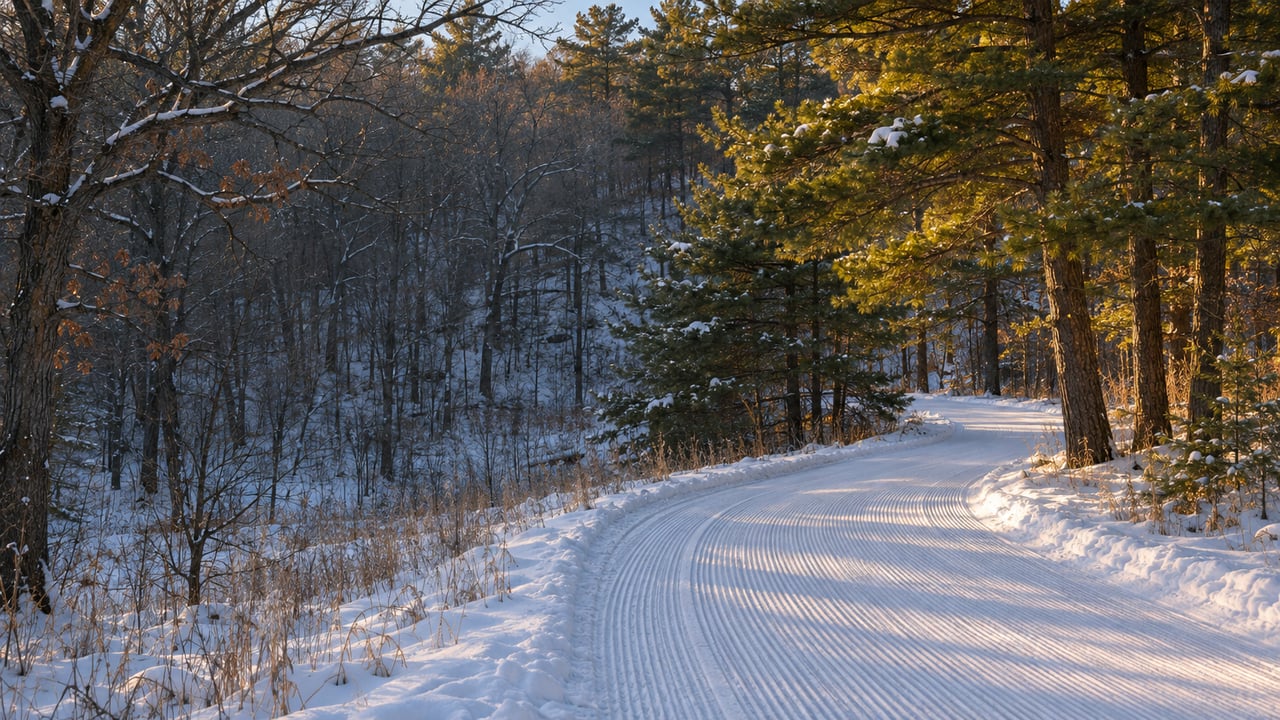
The 323.5 miles of trail in Monroe County are maintained under a state contract, and the work runs through about ten volunteer clubs. Tomah I-Dividers is one of them, and its listed meetings are at the Tomah American Legion Hall.
That setup explains the sticker on your sled, and it explains why this winter's price matters more than it looks.
The trail pass is a club membership pitch
Wisconsin charges two prices for the same trail pass on a Wisconsin-registered snowmobile. If the owner belongs to a recognized club affiliated with the Association of Wisconsin Snowmobile Clubs, the pass costs $10. If not, it costs $30. A nonresident sled pays $50. Each pass covers one season and expires June 30, according to the Wisconsin DNR trail pass page. The DNR says the member pass can be ordered through AWSC.
The pass sits on top of registration. A public-use Wisconsin snowmobile registration costs $30 and lasts up to three years, and riding public trails also takes a pass. Sleds with antique registration don't need the pass.
That $20 gap is the state paying riders to join a club. Club dues vary, and most local clubs don't post theirs, but the discount goes a long way toward covering a membership. Members are the pool that shows up to sign trails, clear brush and run groomers.
The increase that never got a vote
A bill in the last legislative session would have raised every one of those prices. The August 2026 Snowmobile Recreational Council minutes list the proposal:
| Fee | 2026–27 price | Proposed |
|---|---|---|
| Trail pass, AWSC club member | $10 | $20 |
| Trail pass, Wisconsin resident nonmember | $30 | $50 |
| Trail pass, nonresident | $50 | $70 |
| Registration | $30 | $45 |
The minutes say the proposal "was well received but ultimately never made it to the floor for a vote," and that supporters will "have to start over next session." Council members also met with DNR budget writers to ask the department to put the increase in its budget recommendations.
For a Tomah rider, 2026–27 costs the same as last season. The proposal would have pushed the gap between member and nonmember passes from $20 to $30, so the state's incentive to join a club would have grown along with the prices. The minutes say the increase was meant to bring in more revenue for the program, and the requests waiting on that money show why.
Where $300 a mile goes, and where it runs short
The state's 2026–27 funding summary budgets trail maintenance at a flat $300 per mile across 20,267 statewide miles, or $6,084,810 in total. Monroe County's 323.5 miles come to $97,050. Next door in Juneau County, around New Lisbon and Mauston, 282.1 miles come to $84,630. Both counties' mileage matches last season's.
Maintenance is funded first. Bridges, reroutes and repairs compete for what's left. The funding summary shows the program had $9,287,729 available. After maintenance and GPS units, about $2.9 million remained for development and other needs. Bridge rehabilitation requests alone came to $4,725,057. The council's finance chair described it as "$2.9 million available for $4.7 million in JUST bridge rehab requests," the top-priority category. The committee recommended allocating $2,907,049 to fund supplemental requests in full and to fund grant applications.
Supplemental requests have their own line. The council received $2.8 million in them, and the minutes say the revenue set aside for them, nonresident trail passes plus a gas tax multiplier, was "not quite enough" to cover them all.
Equipment reimbursement rates are frozen too. The Infrastructure Committee looked at them in June and recommended keeping 2026–27 rates the same, "given the financial situation (more grant requests than available funds)."
There is one bright spot in the same minutes. Trail pass sales were up from the previous two years. More riders are buying passes, while bridge requests keep outrunning the money available to fix them.
The clubs behind the Tomah-area miles
Monroe Trails, the county club alliance site, lists ten clubs: Cashton Snowblazers, Cataract Trail Busters, Leon Valley Riders, Norwalk Trail Riders, Oakdale Area Snowmobile Association, Sparta Trail Blazers, Tomah I-Dividers, Trail Cruisers, Warrens Trail Twisters and Wyeville Nite-Light Snow-Goers. The ones closest to Tomah list these meetings:
- Tomah I-Dividers: third Tuesday of the month, September through April, 7:30 p.m., Tomah American Legion Hall. AWSC lists it as a member club.
- Warrens Trail Twisters: first Monday, September through April, 7 p.m., Lizzy's Tap, 3817 US-12, Warrens. The Warrens community site says the club maintains trails in Monroe and Jackson counties and helps riders reach local businesses.
- Wyeville Nite-Lite Snow-Goers: third Monday evening, August through April, 6 p.m., at the STMC building in Oakdale. The club covers northeastern Monroe County, maintaining trails from Wyeville toward Jackson County and the Eagles Nest Flowage trail systems at map intersections 51, 50 and 45. Its page invites new members to help maintain trails.
- Oakdale Area Snowmobile Association: third Monday, 7 p.m., Eastern Monroe County Rod and Gun Club in Wyeville. The club notes the location can change.
Across the county line, Juneau County's snowmobile page lists six clubs: Castle Rock River Runners, Hillsboro Trailblazers, Lyndon Knights, Redstone Riders, Sunset Drifters and Winter Wanderers. Winter Wanderers has a New Lisbon Facebook page.
Club work also includes things a rider never sees. AWSC's landowner guidance says local clubs contact property owners for permission and work out where the trail goes with them, either verbally or on a club permission form. A lot of trail mileage crosses private land, so some of each club's work is staying on good terms with the landowners who let the trail through.
Next winter, the map gets measured by GPS
One change is already set, and it lands after this season. Starting in 2027–28, state grant money will be based on trail miles in the GIS layer from the Groomer Tracking System, not the mileage in current agreements. The DNR expects some counties to go up slightly and some to go down, with the statewide total unchanged. It plans to contact counties in the coming months so the change "won't be a surprise come next season." Groomer Tracking System is also piloting a new platform this winter, and each county can request a copy of its GIS trail layer.
At $300 a mile, Monroe County's $97,050 contract for 2026–27 is the last one based on the old mileage. From next season on, the funding will follow the trail miles mapped in the Groomer Tracking System's GIS layer.
Before the first ride
Opening and closing trails is up to each county, and the county pages don't list a fixed snow depth. To get ready:
- Renew the registration if it has lapsed, and buy the 2026–27 pass at the price that fits: $10 through an AWSC club, $30 without one.
- If you're joining for the discount, go to a club meeting. The Tomah I-Dividers meet on the third Tuesday at the American Legion Hall.
- For Monroe County conditions, check Monroe Trails. Monroe County Forestry & Parks sends riders there.
- For a statewide view, the Travel Wisconsin snow report posts county status updates from local volunteer reporters.
- Riding into Juneau County? Its snowmobile hotline is (608) 562-5737.
Fees and pass rules here come from the DNR's published pages and are general information, not legal or financial advice, so confirm what applies to your sled with the DNR before you ride.
We spend our winters around these trails too, and when a buyer asks whether a property near Tomah has a trail nearby, the answer usually starts with which club grooms it. If sled access is on your list, Pfaff Properties WI can walk the map with you. Let's find your place in Wisconsin.