Thinking about buying a lake-area property near New Lisbon and using it as a short-term rental? It can be a smart way to offset ownership costs, but this is not a market where any cabin near the water automatically works. You need to look at access, seasonality, local rules, and how guests actually use these properties. This guide will walk you through the big considerations so you can evaluate a property with clear eyes. Let’s dive in.
Why New Lisbon draws short-term rental interest
New Lisbon sits just off I-90/94 at Exit 61, which makes it an easy drive for many Midwest travelers. The city notes it is about 27 miles from Wisconsin Dells, 81 miles from Madison, 191 miles from Minneapolis/St. Paul, and 221 miles from Chicago. That drive-to location matters because it supports weekend trips, second-home use, and family getaways.
This is also not a one-season story. Juneau County planning materials describe a strong second-home market tied to lakeshore and riverfront development, along with broader seasonal-to-permanent housing activity. For you as a buyer, that means short-term rental demand is part of a larger recreational ownership pattern in the area.
Why the lakes shape guest demand
Castle Rock Lake and Petenwell Lake are major reasons people come to this part of Central Wisconsin. Juneau County describes Castle Rock Lake at about 16,000 acres, and the Wisconsin DNR describes Petenwell Lake as a 23,173-acre flowage. Large water recreation areas like these tend to attract longer stays than a quick overnight stop.
That demand is tied to how people spend time here. Public recreation infrastructure around the lakes supports boating, fishing, swimming, paddling, camping, and family lake weekends. In practical terms, your likely guest base is more recreation-focused than business-travel focused.
Recreation amenities support overnight stays
Buckhorn State Park on Castle Rock Flowage offers five boat ramps, a 300-foot swim area, seasonal canoe and kayak rentals, and year-round fishing access. Juneau County’s Castle Rock Park and Wilderness Park also add campgrounds, swimming areas, showers, and boat-launch amenities. Those features help make the area appealing for multi-day trips.
If you are comparing properties, think about how close and convenient they are to the activities guests already come here for. In this market, location is not just about distance to town. It is also about how easily guests can get on the water, store gear, and enjoy the property without hassle.
Seasonality matters more than many buyers expect
Summer is the clearest demand window around New Lisbon’s lakes. The city highlights warm-weather recreation, and county park staffing runs mainly from Memorial Day weekend through Labor Day weekend. If your goal is short-term rental income, you should expect the strongest booking interest from late spring into early fall.
That does not mean the rest of the year is empty. The DNR notes year-round fishing opportunities on Castle Rock Flowage, and the area also draws hunting, snowmobiling, and ATV activity. Still, demand drivers change by season, so your pricing and occupancy expectations should change too.
Winter and shoulder seasons need a different mindset
A lake house that shines in July may not perform the same way in January. Winter travelers may care less about swimming and more about fishing access, trail access, parking ease, and whether the home is comfortable during cold-weather stays. You may find smaller but still real demand outside peak summer months.
Petenwell Lake also has a winter drawdown of about 5 to 6 feet, according to the DNR. That can affect boat-launch use until water levels rise again. If you are evaluating a property for broad seasonal appeal, that is the kind of detail worth understanding upfront.
Micro-location can make or break the experience
On paper, two lake-area homes can look very similar. In reality, their guest experience can be very different. Around New Lisbon’s lakes, micro-location often carries as much weight as home size or finish level.
The DNR notes that Castle Rock’s open water can get rough in windy conditions and advises canoeists to stay near shore. For you, that is a reminder that protected bay exposure, shoreline conditions, and wind exposure can affect how guests use the property and how they feel about their stay.
What to look at beyond the house itself
When you tour a property, pay attention to the details that matter to lake guests:
- Parking space for multiple vehicles
- Room for boat or trailer storage
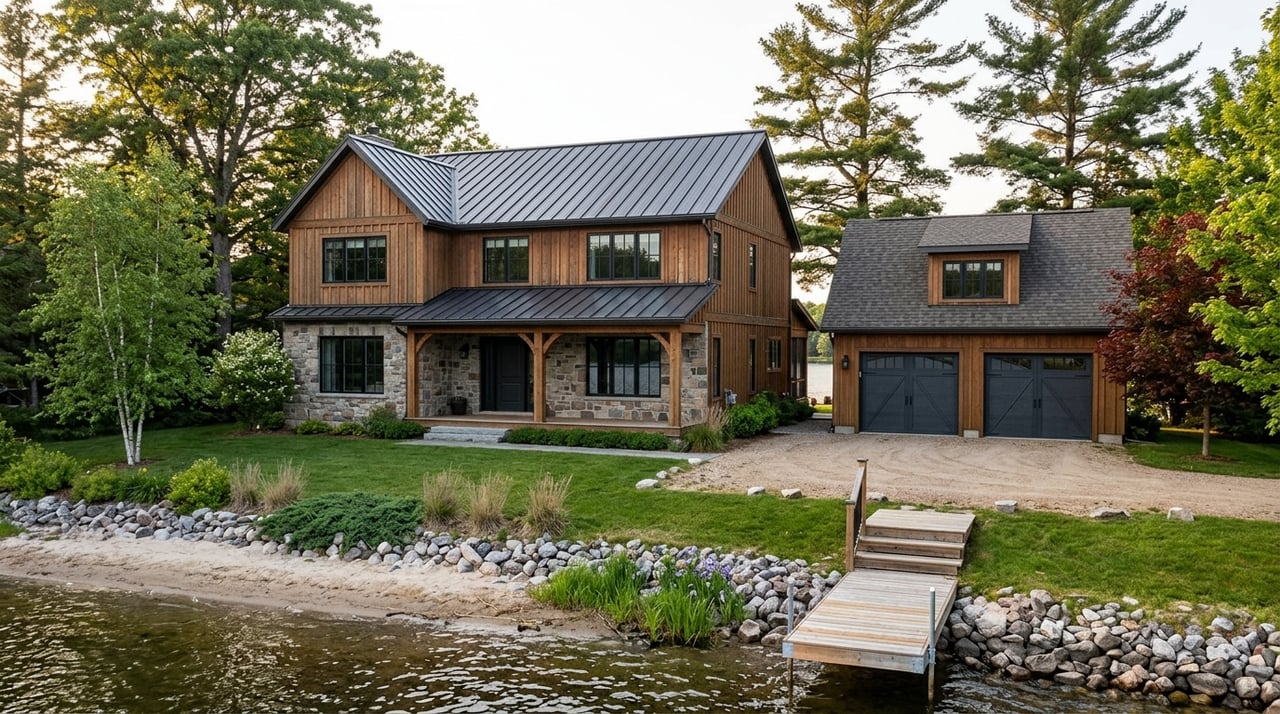
- Ease of getting from the home to the shoreline
- Dock or pier setup, if applicable
- Shoreline condition and water access
- Distance to public launches or recreation areas
- Clear entry and arrival logistics
A property that is easy to use often performs better as a guest product than one that is prettier on paper but awkward in practice.
Guest logistics are part of the investment
Lake-area guests often arrive with more than a suitcase. Boats, trailers, coolers, fishing gear, and larger family groups are common in a recreation market like this. That changes what makes a property functional as a short-term rental.
You should think through the full guest arrival experience. Can people find the property easily, park without confusion, unload gear, and understand how to access the water or nearby launch areas? Recreation travel is logistics-heavy, and smoother stays usually lead to better reviews and repeat bookings.
Waterfront due diligence is especially important
If you are buying near the water, your checklist should go beyond the usual showing notes. Waterfront ownership can come with added maintenance, regulation, and infrastructure questions. Those issues matter whether you plan to use the property personally, rent it part time, or both.
The Wisconsin DNR says work below the ordinary high water mark, or projects such as piers, boat ramps, riprap, seawalls, gravel access, and some shoreline changes, may require permits. The DNR also notes that existing permits for structures such as piers generally transfer with the land unless the owner modifies the structure. That makes permit history and current conditions worth reviewing before you buy.
Utility and site questions to ask early
You should also confirm the condition and status of core property systems. For lake and rural properties, that includes well and septic questions, any unused well issues, and groundwater considerations. These are not small details when you are trying to evaluate whether a property is truly ready for guest use.
A short-term rental candidate should work first as a property you can own responsibly. Income potential matters, but so do access, maintenance, and compliance.
Short-term rental rules to review first
Before you assume you can rent a property for short stays, confirm the local and state requirements that apply. In Wisconsin, the Department of Agriculture, Trade and Consumer Protection says tourist rooming houses generally include vacation homes, cabins, and cottages rented to tourists or transients for a short period. DATCP also says lodging facilities require a permit.
That is a key point for buyers. A lake house used for short stays should be treated as regulated lodging, not simply as a private residence with occasional guests.
Local jurisdiction matters
DATCP says inspection and permitting authority depends on jurisdiction. That means you should verify which local authority handles permitting and inspection for the specific property you are considering. It is better to sort that out before closing than after you start planning bookings.
Zoning can matter too. New Lisbon’s code explicitly lists bed-and-breakfast establishments as conditional uses in residential districts. If your intended use is a hosted bed-and-breakfast rather than a whole-house rental, the local review path may be different.
Taxes should be part of your math
If you are budgeting for a New Lisbon short-term rental, make room for taxes from the start. Wisconsin DOR says rooms or lodging for less than one month are taxable. Juneau County has a 0.5% sales tax on top of the 5% state sales tax.
New Lisbon also has its own 5% municipal room tax and a formal room-tax commission. That means a short-term rental in the City of New Lisbon should expect at least 5.5% in state and county sales tax on lodging, plus the city’s 5% room tax, subject to exact sourcing rules and any exemptions.
Why location boundaries matter
Room taxes are municipal rather than countywide, so the exact property location matters. A house with a New Lisbon mailing address is not always the same thing as a property located within the city for tax purposes. If you are comparing properties, make sure you know the exact jurisdiction before estimating costs.
A practical way to judge rental fit
In this market, the main question is not whether lake properties are attractive. They are. The better question is whether a specific property’s location, access, parking, shoreline setup, seasonality, and compliance burden line up with your goals.
A good short-term rental candidate near New Lisbon usually fits a recreation-focused stay. Think family weekends, boating trips, fishing trips, and second-home style use with some shoulder-season demand mixed in. If the home works well for that lifestyle and the rules and numbers make sense, you may have a solid opportunity.
If you are weighing a cabin, lake home, or recreational property near Castle Rock Lake or Petenwell Lake, talking through the real-world pros and cons before you buy can save you time and money. Katie Pfaff and the Pfaff Properties WI team can help you look at the property not just as a listing, but as a land-and-lake ownership decision.
FAQs
What makes New Lisbon a good area for short-term rental interest?
- New Lisbon is a drive-to recreation market near Castle Rock Lake and Petenwell Lake, with access from I-90/94 and appeal for weekend trips, second homes, boating, fishing, and family stays.
What seasons are strongest for short-term rentals around New Lisbon’s lakes?
- Late spring through early fall is typically the strongest period because boating, swimming, fishing, and camping are most active then, while winter and shoulder seasons have narrower recreation-driven demand.
What property features matter most for a lake-area short-term rental near New Lisbon?
- Parking, boat or trailer space, shoreline access, launch convenience, protected water exposure, and easy guest arrival logistics can matter just as much as the home’s size or finishes.
What permits may matter for waterfront property near New Lisbon?
- According to the Wisconsin DNR, shoreline and in-water work such as piers, boat ramps, riprap, seawalls, gravel access, and some shoreline changes may require permits, so buyers should review current conditions and permit history.
What licensing should buyers review for a short-term rental in Wisconsin?
- DATCP says tourist rooming houses generally include vacation homes, cabins, and cottages rented to tourists or transients for a short period, and lodging facilities require a permit, with inspection and permitting authority depending on jurisdiction.
What taxes should you budget for a short-term rental in New Lisbon?
- Wisconsin DOR says lodging for less than one month is taxable, and a New Lisbon-city short-term rental should expect at least the 5% state sales tax, 0.5% Juneau County sales tax, and the city’s 5% room tax, subject to exact sourcing rules and any exemptions.